What happens when regional SALTO resource centers and National Agencies of the Erasmus+ Youth and the European Solidarity Corps come together to exchange experiences and strengthen connections?
The meeting
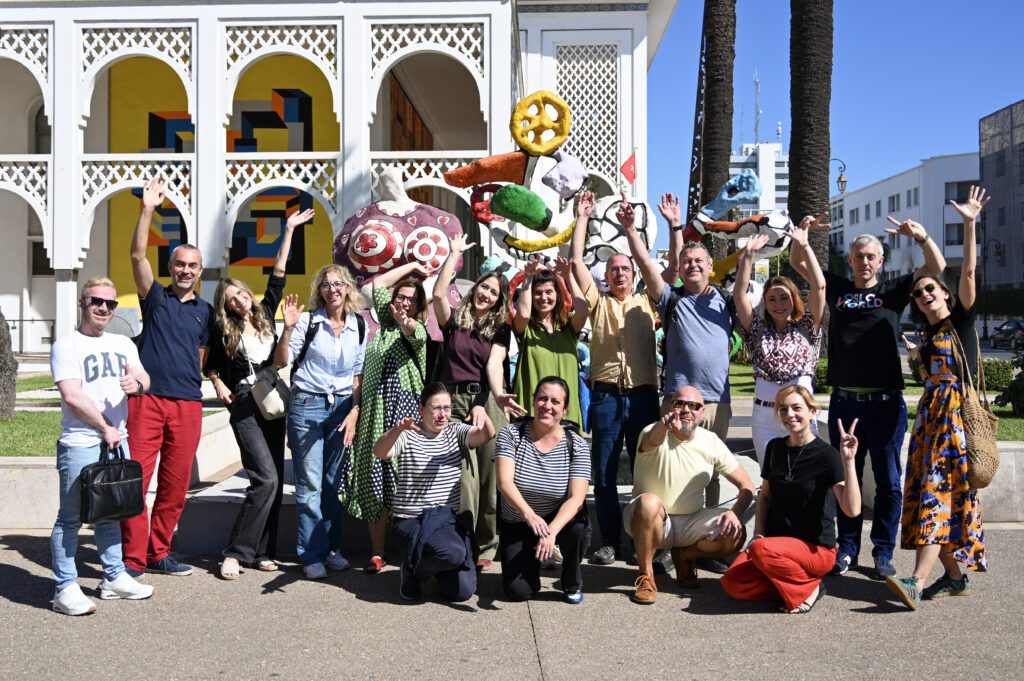
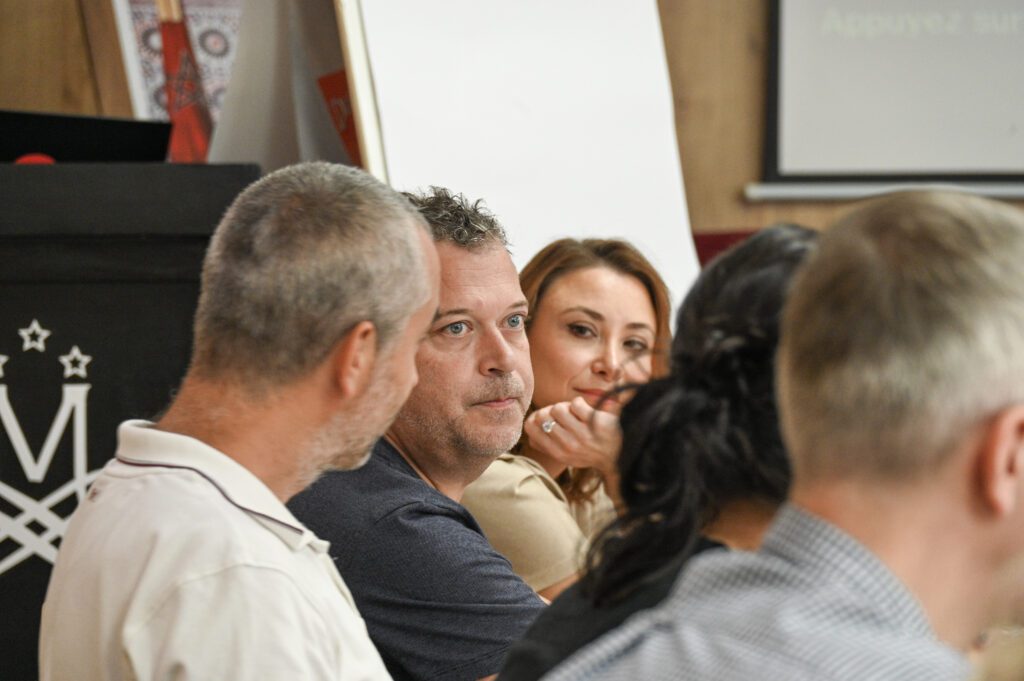
From 21st to 24th October 2025, National Agencies staff and representatives from the regional SALTO Resource Centres met in Rabat for the National Agencies Staff Meeting on youth cooperation between the programme and the neighbouring partner countries. Over two days, the event offered a space for reflection, exchange, and forward-looking discussions on how cooperation between National Agencies, SALTO Resource Centres, and youth organisations can continue to strengthen youth work and create more inclusive opportunities for young people.
Paavo Pyykkönen, senior programme adviser at the Finnish National Agency for Education (EDUFI) says:
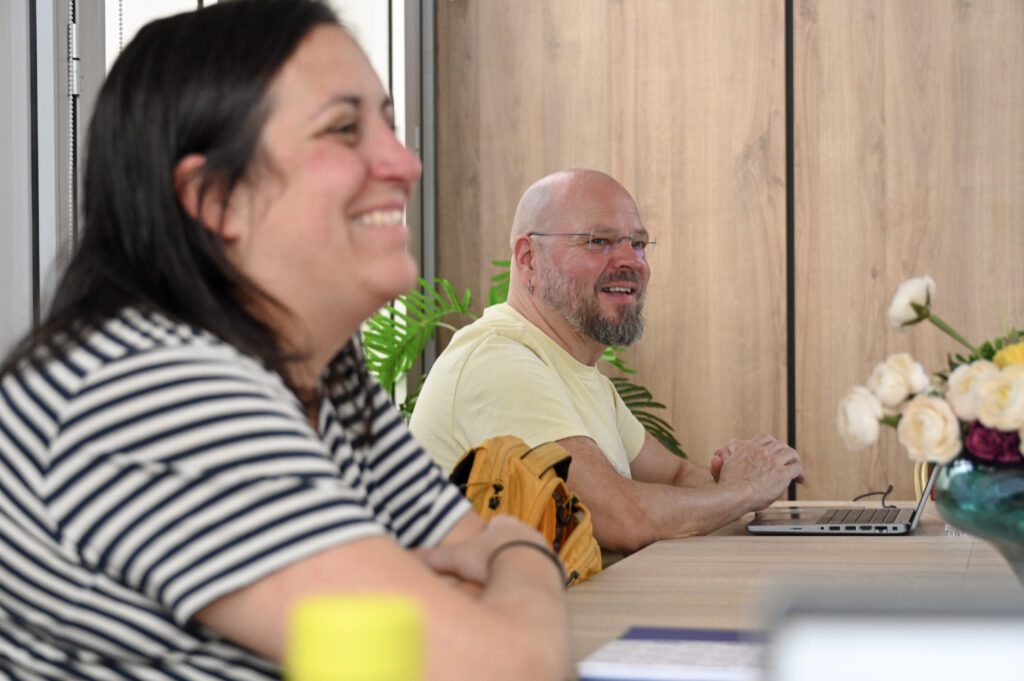
I think that such strategic cooperation helps us, the National Agencies, to concentrate on the work with the neighbouring regions. In the daily work, we may forget it easily, and working with other national agencies that are also interested in this cooperation helps us to come up with new ideas and new projects. And in this time and age, when the world is like it is, I think it’s very important that we do work with the neighbouring regions and on topics like solidarity and peace building, inclusion – all of these important things that bring stability in our lives.
Setting the Tone: Values Behind Cooperation
The meeting opened in an atmosphere of reconnection and shared purpose. National Agency staff introduced themselves by recalling their experiences and motivations related to international cooperation. The facilitator, Snežana Bačlija Knoch, encouraged them to look beyond their institutional roles and focus on the values behind their work — solidarity, participation, and mutual learning.
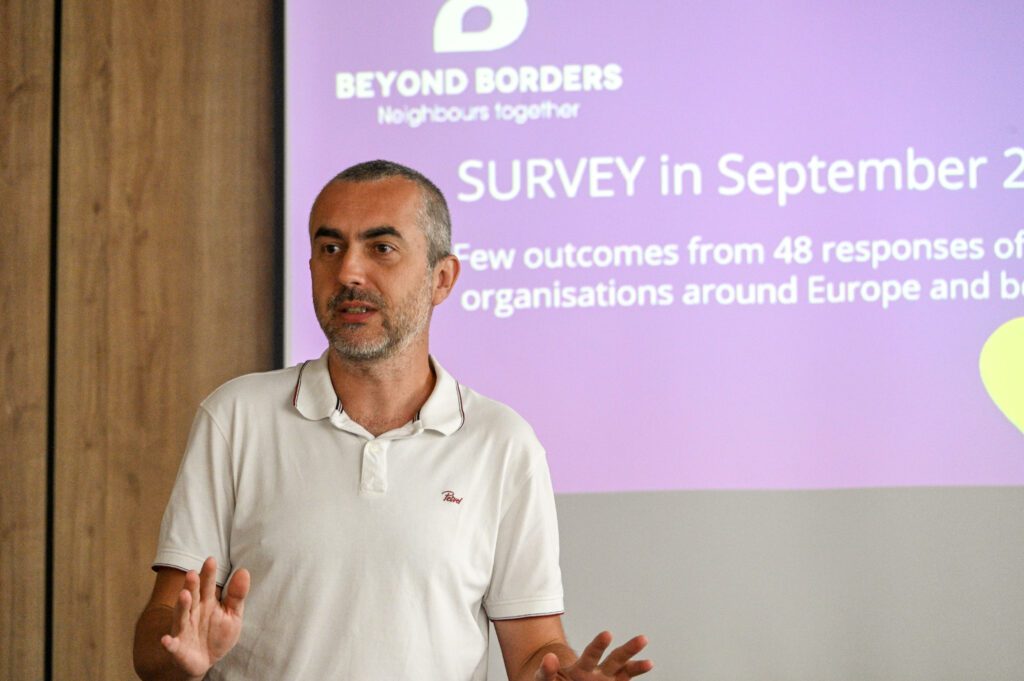
Initial sessions looked at the current state of cooperation with neighbouring partner countries, drawing on survey results presented by Tomasz Szopa, expert of SALTO Eastern Europe and Caucasus Resource Centre. The findings highlighted a strong belief in the value of inter-regional collaboration, which fosters empathy, understanding, and a sense of belonging among young people. Yet, several issues persist: complex administrative requirements, visa restrictions, and unequal access to funding continue to limit the participation of smaller or newer organisations. Discussions focused on the need for simpler procedures, fairer funding structures, and more sustained partnerships to ensure that cooperation remains inclusive and impactful.
How do National Agencies benefit from this cooperation? Lea Meister, programme coordinator for youth work at Movetia from Switzerland, shares her perspective:
Experiencing Local Youth Work in Morocco
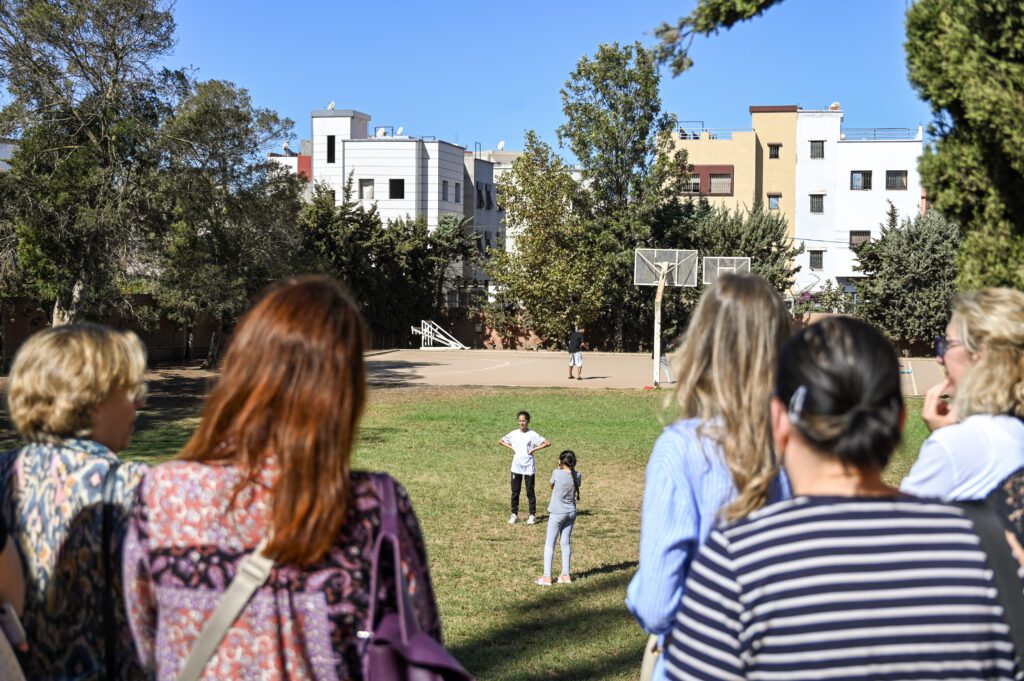
In order to have contact with the local youth work reality in Rabat, the participants visited Les Enfants de l’Ovale Maroc (EDOM), a Moroccan socio-educational and sports association supporting children from disadvantaged backgrounds. Founded in 2004 by former amateur rugby players, EDOM was born of a desire to combine their love of sport with meaningful social action in the commune of Mers El Kheir, near Témara. During the visit, the group learned about the organisation’s structure, funding model, and the concrete impact of its programmes on local youth. They also met two French European Solidarity Corps volunteers who contribute daily to the association’s activities. The visit offered valuable insights into how grass-roots youth initiatives function in the South Mediterranean region and how European youth cooperation can support them. Sharing a meal afterwards added a sense of community and informal exchange — a simple but powerful reminder of how connection starts through human encounters.
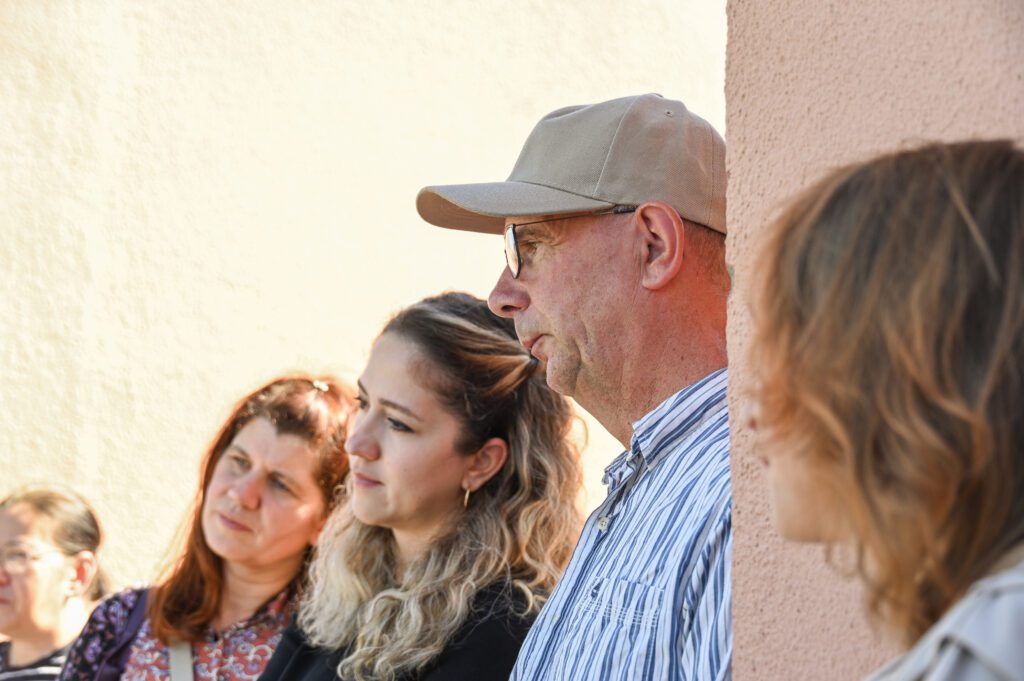
Alice Melsheimer, the programme officer at JUGEND für Europa from Germany, shares:
I saw volunteers there coming via the European Solidarity Corps, and I think their takeaway will be huge.
Regional Realities and Shared Challenges
The second day deepened the reflection on regional realities and the broader policy context. The SALTO Resource Centres for Eastern Partner countries, Western Balkans and South Mediterranean region presented updates on youth work cooperation across their regions. The discussions illustrated that, while contexts differ, the challenges are often shared: limited mobility, administrative obstacles, and fragile civil society spaces. At the same time, there are many examples of innovation and perseverance, where organisations find creative ways to connect, engage, and build meaningful partnerships despite constraints.
Find out more about successful examples of youth cooperation between the programme and the neighbouring partner countries from the words of Stéphanie Jakubowski, coordinator of the SALTO EuroMed Resource Centre.
These exchanges showed that cooperation is not just about funding or project results; it is about relations that allow ideas, values, and people to move and grow together. Working across regions helps organisations learn from one another and stand in solidarity when challenges arise. Discussions later turned to the future of inter-regional cooperation, how to improve coordination, visibility, and advocacy, and how the strategic partnership Beyond Borders could continue supporting National Agencies in this shared effort.
Exploring the Wider Context
The morning continued with the session “The Wider Context: The Changing Political, Social and Economic Climate and Its Effects on Cooperation”, led by Dermot O’Brien, an experienced international trainer and facilitator from Ireland. With many years of work in Development Education, Youth Work, and Further Education, and as part of the Irish National Agency, Dermot invited the group to reflect on how global and regional developments influence the realities of youth cooperation. He spoke about the importance of maintaining flexibility and a values-based approach in youth programmes, especially in times of political uncertainty and social change. His contribution encouraged staff to consider how to make youth work not only reactive to global events but also proactive in shaping more inclusive and democratic communities. Global changes, from conflicts to economic shifts, were discussed in relation to how they affect the programmes and the daily work of National Agencies and SALTO Resource Centres.

Sanja Posavec, the assistant director at Agency for Mobility and EU Programmes (AMEUP) from Croatia says:
If we work with Erasmus+ and the European Solidarity Corps programmes, we can build new skills and competences for young people from all the countries involved, and not only for those within the European Union.
Looking Ahead: The Future of Erasmus+ and Cooperation
In the following session, Pierre Seailles, Programme Manager for Youth Policy and Programmes at the European Commission, provided a forward-looking perspective on the future of the Erasmus+ and European Solidarity Corps programmes. He discussed how policy developments and programme priorities are evolving, and how National Agencies can play an active role in supporting cooperation with neighbouring regions. His input inspired reflection on how to better align local and European actions, ensuring that inter-regional cooperation continues to respond to the needs of young people and the organisations that work with them.
Throughout the day, participants reflected on how cooperation requires persistence and long-term vision. The results of youth work are not always immediate, but its impact grows over time through trust, dialogue, and shared experiences. Diversity was recognised not as a difficulty but as a strength.
Anastassia Šegurova, the programme officer at Estonian Agency for Erasmus+ and European Solidarity Corps underlines:
We speak a lot about tolerance, cultural differences, but we learn it only when we have personal experience, personal contact. This is the opportunity that the Erasmus+ and the European Solidarity Corps programmes can give.
Continuing the Journey Beyond Borders
As the meeting concluded, participants expressed a shared commitment to continue building on the connections made in Rabat. The conversations reaffirmed that cooperation across regions remains essential for strengthening youth work and creating fairer, more inclusive opportunities for young people.
Samuel Le Floch, the head of cooperation and programme support unit at the Erasmus+ France Youth and Sport Agency thinks forward:
Cooperation between organisations from European Union and neighbouring countries through youth programmes has existed for more than 20 years. It contributes to bridge youngsters and professionals, and to an awareness of a common objective in terms of citizenship and participation to create a more active society. Hopefully, this dynamic will continue for the next Erasmus+ Youth programme 2028-2034.
The Rabat meeting reminded everyone that inter-regional cooperation is not just activities taking place within Erasmus+ and European Solidarity Corps programmes, but it is a shared responsibility and a long-term investment in understanding, solidarity, and peace. Even when progress is gradual, every exchange and every partnership brings us one step closer to a more connected and collaborative youth field, both in Europe and beyond its borders.