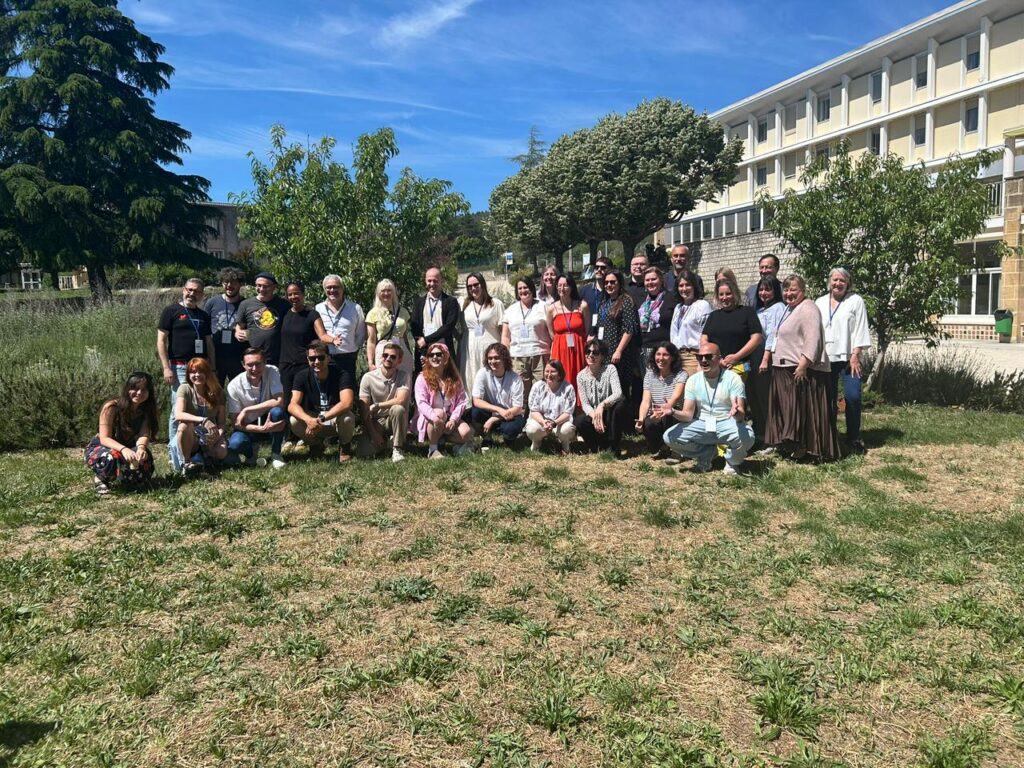
As someone who was born and bred in Warsaw, a city of almost two million people, and later moved to London, an even bigger city, it’s fair to say I was stressed to write up on an European seminar on Youth Work in Rural Areas. But, apart from a case of impostor syndrome, I was excited to visit Manosque, a lovely rural town in the south of France, where I would be meeting 30 active, rural youth workers and covering some of their stories.
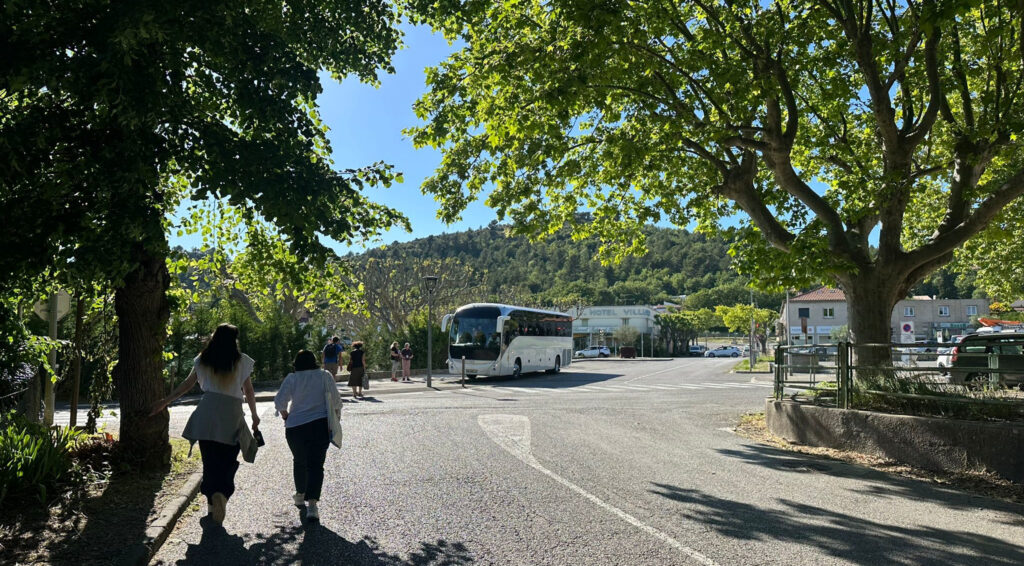
The journey there was especially pleasant as the views out the window switched from my rather depressing, rainy early morning transit to Stansted airport to vibrant green fields and clear blue sky of rural Provence.
Breaking the ice with youth work
The first day of activities started off with icebreakers, as expected. For me however the ice wasn’t exactly broken. One of the first games was meant to make us stand around the room based on the population size of our home town. The facilitators put down post-it notes with different population levels in a straight line on the floor while I was thinking whether to use Warsaw’s or London’s population. Quickly I realised that it wouldn’t make much difference as the highest number on the post-its was “10 000+”. I awkwardly tucked myself away into the room corner just to not get outed in front of everyone.
That same day, as I spoke to the participants, I became aware that youth work wasn’t simple to define. Being totally honest, it was a profession that I didn’t really know existed beforehand so I wanted to understand it better. To get the gist of it, I tried to talk to the seminar participants individually. Quite early on, I came across a sentence which I thought perfectly summarised its essence. Antti from Finland, one of the facilitators leading the seminar, told me that if a young person asks him a question his answer will be:
I don’t know but let’s find out
While at first it may sound vague, over the next three days I failed to find a one liner which would grasp this concept better.
Youth work, as I found out myself across many conversations, is a type of social work which relies heavily on support rather than guidance. Under that principle, it’s about offering young people a safe space to grow and having someone to turn to, a trusted adult who can offer genuine advice. If I had to compare it to something, I’d say it’s like that one supportive teacher at school who actually cared for you and your development. Or in other, much simpler terms, it’s about being a human – a human who instead of punishing a troubled child will put effort in to help and understand them.
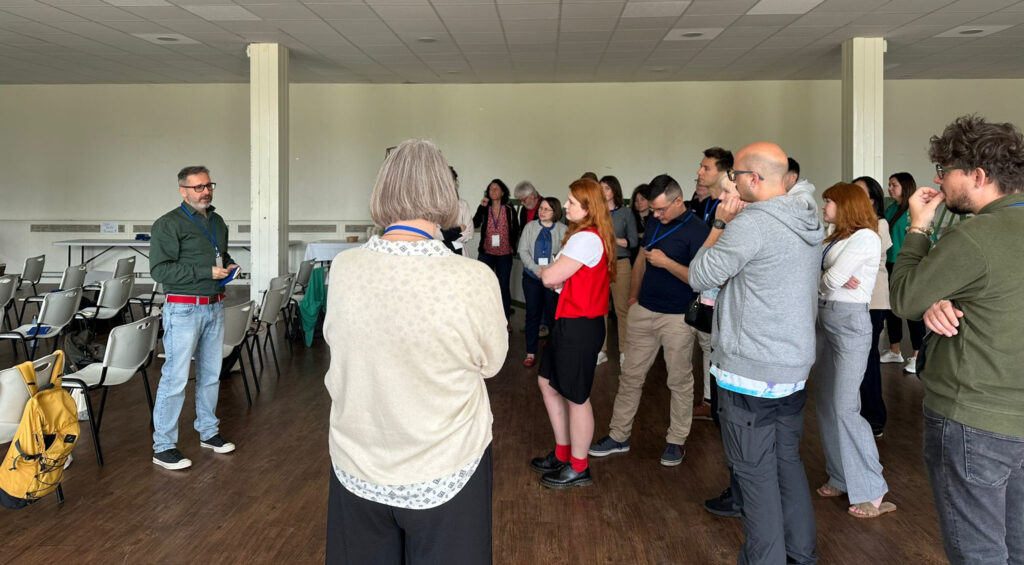
Through all sorts of activities from tree planting to career classes, youth work builds intangible assets and skills rather than measurable test scores like in traditional schools. Interestingly, I found out from Antti that in a way youth work is a profession which tries to run itself out of business. He said that:
We train them and help them so ultimately they won’t need us
which captures the ultimate goal of a youth worker – helping a young person build up independence and confidence to stand on their own.
Find your meaning
Once I understood what youth work is I wanted to find out what drives people to do it because I saw this career path as quite refreshing and very noble. Among all the chats about corporate jobs and internships in London, youth work stood out as something more meaningful than just money.
A common theme among seminar participants, as different as ex-sports journalists and former psychologists, was what Antti calls the “nut” analogy – the idea that you need only one person in a community who is nuts enough to start youth projects. After that it becomes a domino effect. It is a surprisingly accurate theory. By the end of the first day I had already lost count of participants who were either “youth worked” themselves or had close friends or family who were.
Ultimately above all personal reasons or motivations the people I met were just passionate about helping others and found joy in doing so.
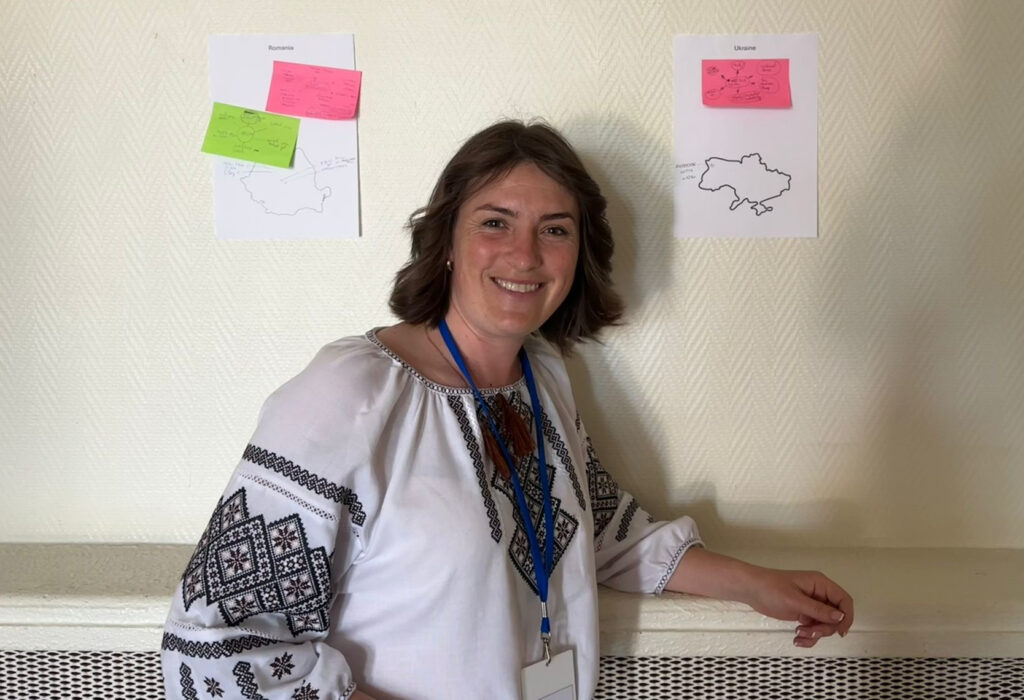
Yulia, a youth worker from Zhydychyn in Ukraine, gave me this impression very early on. Apart from being the former mayor of the village and currently working as a university lecturer, Yulia is also a part of an NGO called Work Together.
In fact, she founded the organisation after finishing her work as mayor as she believed flexibility and less bureaucracy could benefit her community more. Yulia was right about her instincts since a lot of her current impressive projects have been completed in creative ways without substantial funding.
For instance, she works heavily on promoting Zhydychyn’s local monastery, a centuries old institution which brings in pilgrimage tourism but more importantly serves as the heart of community life. Work Together created a tourism information centre in the village, produced drone footage and built a promotional website with little external funding. To tackle financial challenges Yulia gets creative. The monastery website for example was created by a computer science student at her university who did it as a university assessment.
The work she does is not limited to the monastery. In the war-torn reality, she provides hope to young people in her area promoting mobility exchanges and successfully organising Zhydychyn’s first ever Erasmus+ youth exchange. Her community clean ups and tree planting events are now in their second year and she is also currently working on a Museum of Good Deeds, a space to celebrate people who do good things for others.
Despite the harsh reality of war, Yulia is strikingly positive. Her redefined sense of value, faith and community are reasons why she is as forward looking as she is.
If I love my village, people around me will love this village too. If I hate it, people around me will hate it too.
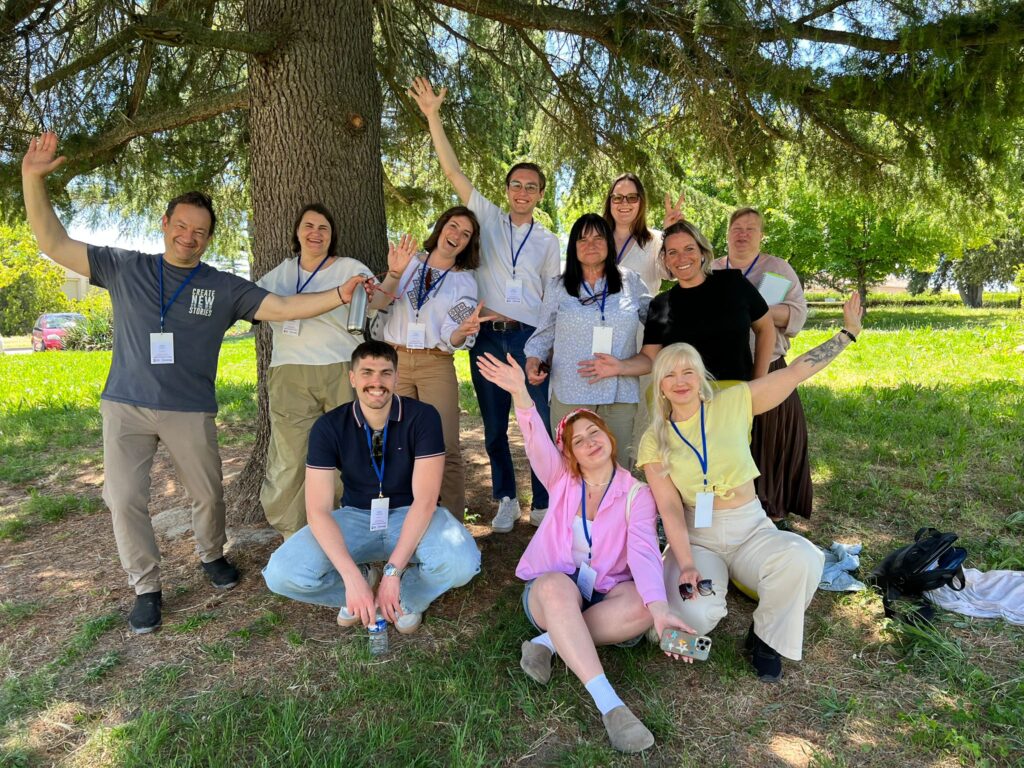
On the complete opposite end of the European resource spectrum was Olivier. What struck me most about him was his humility. On the last night of our trip during goodbye drinks and karaoke I was having a conversation with him and Valentina, another youth worker from Italy. During that conversation, she described Olivier as the definition of a life long learner and I couldn’t agree more.
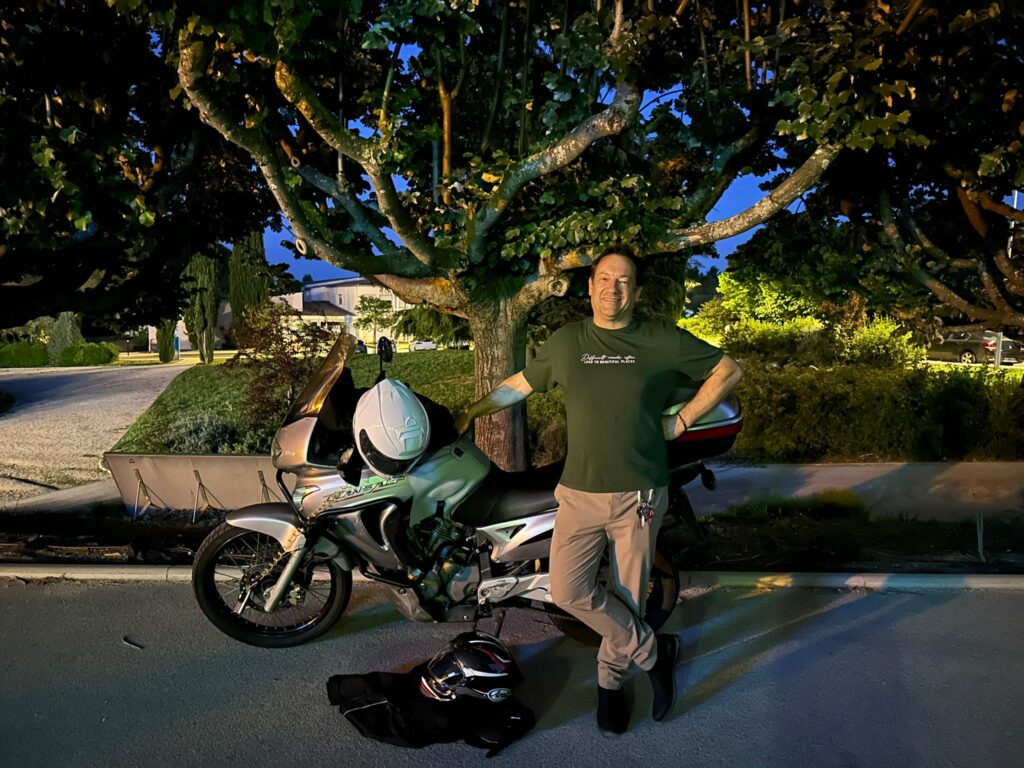
I first met him when we sat at the same table during the first meal. He currently works for a national association representing a network of over 400 rural vocational schools across France but his road to get there was unusually international to say the least. He started volunteer youth work as a teenager and after graduating from university worked as a teacher and policymaker helping develop education systems in Madagascar, Senegal, Burkina Faso and Benin. Yet despite his impressive CV the first time I met him he seemed much more interested in my work, which as a 19 year old undergraduate student isn’t nearly as impactful as his.
That was my main impression of him – a lifelong learner. Having talked to almost all participants for a little bit he seemed to be one of the most experienced in youth education yet he was highly inquisitive about other participants and their work. Olivier believes that to make partnerships actually work people need to drop their titles and diplomas and instead focus on being a person first.
You need to get off your high horse. I run an institution, you run an NGO, what can we do together?
He was a firm believer that real partnerships stem from small human moments, not project meetings and agendas. And that’s why it made perfect sense that Olivier and Yulia, both of whom I have been talking with all week, partnered up on the last day.
They didn’t even have a solid idea, they just planned to call each other and brainstorm in a week’s time despite their different locations, backgrounds or institutions. It was simply because both of them, like all the other participants, were passionate about helping young people.
The Jantti
The seminar, which I found really eye opening, would not have been the same if not for Antti and Jan (also known as self-proclaimed Jantti; based on the Brangelina super couple), the two facilitators leading the activities.
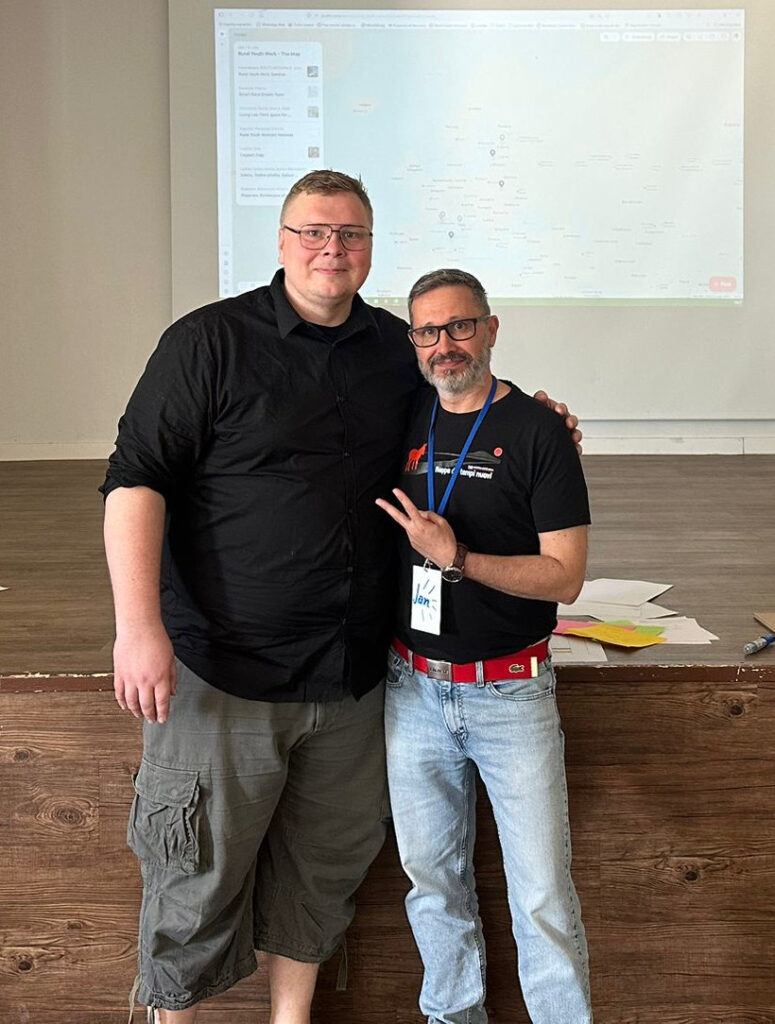
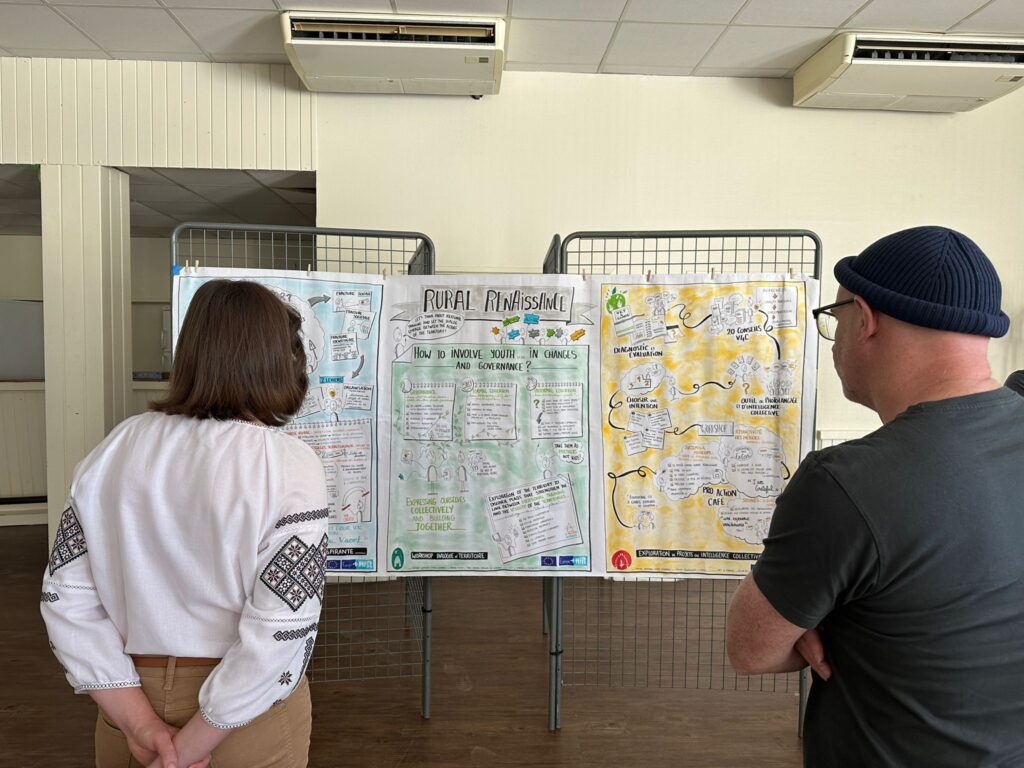
Throughout the week their seemingly effortless organisation of talks and activities always had a meaning useful for the participants. The Agree or Disagree exercise for example asked us to stand in the room based on the extent to which we support life on another planet or marrying robots. The purpose wasn’t to just get us chatting about something fun but to have us thinking about the future to smoothly move onto the future of rural youth work, a major theme explored on the last day of the seminar.
I think most seminar attendees would agree that if not for Jan and Antti, their jokey rivalry and excellent planning the seminar would not have been the same. They would guide us on what problems to cover but let the participants, all of whom had expert experience in youth work already, talk about solutions. Jan and Antti engaged us in conversations to let us come to our own conclusions in our own manner, perfectly reflecting Antti’s principle of “I don’t know but let’s find out”.
Sitting on the coach back to the airport, I realised that by forcing me to find my own answers Jan and Antti had actually youth-worked me.
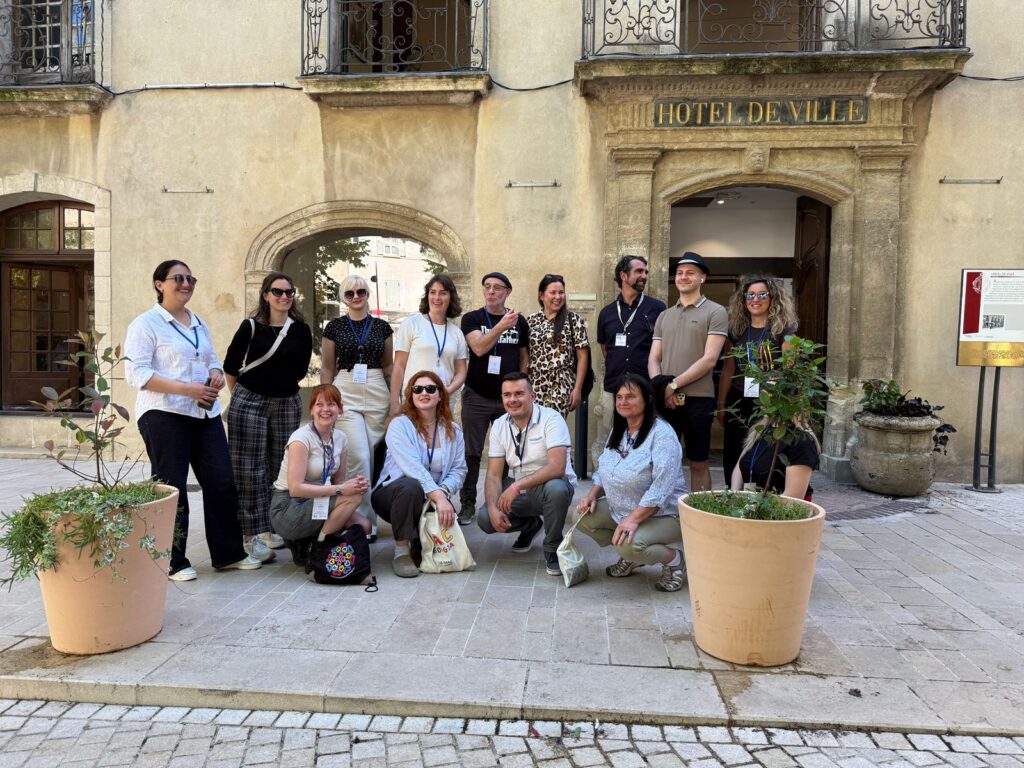
| The author of the article, Karol Hejduk, is a member of the Eurodesk’s Pool of Young Journalists 2026. The Pool gives young people the opportunity to develop stories and highlight youth experiences from across Europe. It’s a space where storytelling, creativity and participation come together. The photos used in the article are published with the consent of the author and participants of the seminar. |