What does a calligraphy pen in a Georgian village have in common with a graffiti wall in Berlin? The Story of CivicArt
This is the story of a project that went beyond lecturing young people about democracy—it empowered them to shape it. For two years young people expressed their voice as citizens with visual arts.
It started with a question
Youth workers in Ukraine and Georgia knew the problem very well. Somebody organises a lecture about civic values, and half of the room look at their phones. But give the same young people a camera or a stage, and suddenly they have something to say.
“Youngsters are ready for changes. They are eager to enroll themselves in new endeavors; they just need some guidance” – says Anna Mushkudiani from KnowledgeHub, who together with Ketevan Kukuladze and Maia Mushkudiani, organized the What Is Togetherness event in Rustavi, Georgia.
Altogether, four organisations decided to test an idea. Resonance Foundation from Ukraine, Gergart from the Georgian mountain region of Kazbegi, KulturNest from Berlin and IICL from the Spanish city of Letur asked themselves: what if art itself could become a language of civic education? They called this approach “artivism”, a mix of art and activism.
Would it work in a small Georgian municipality? Would it work in an Ukrainian city living through war? Nobody knew yet.
Learning on the streets of Europe
The journey began in Berlin, where almost every wall tells a political story. During a study visit, youth workers and artists from the partner countries walked through the city not as tourists but as detectives. Why does a mural sometimes say more than a speech? What makes a passer-by actually stop and think?
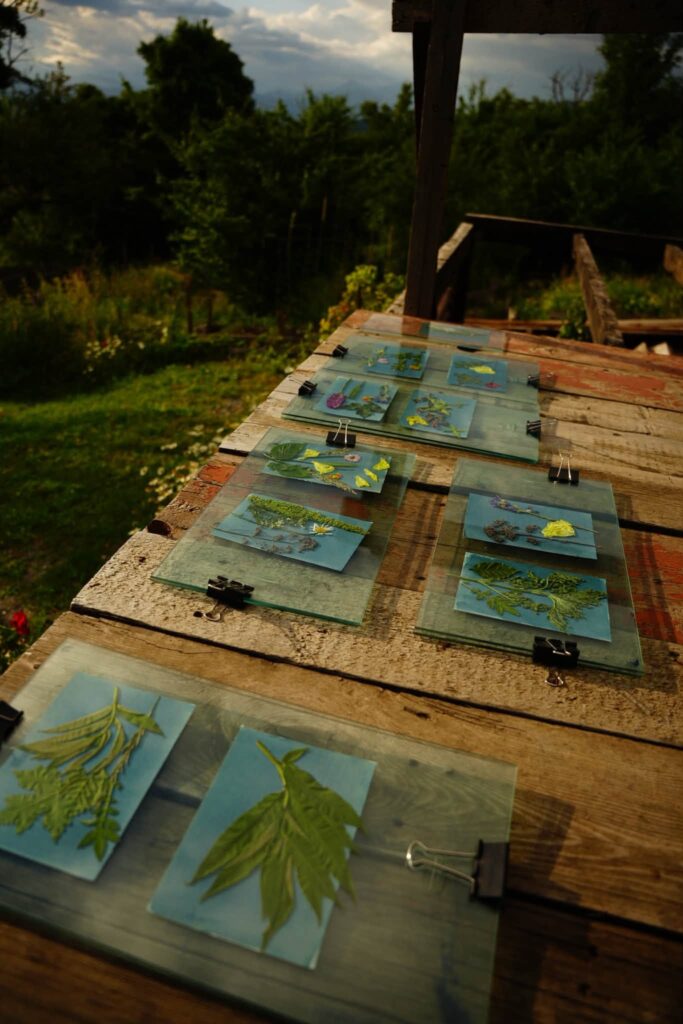
They came home with full notebooks and with an itch to try everything themselves.
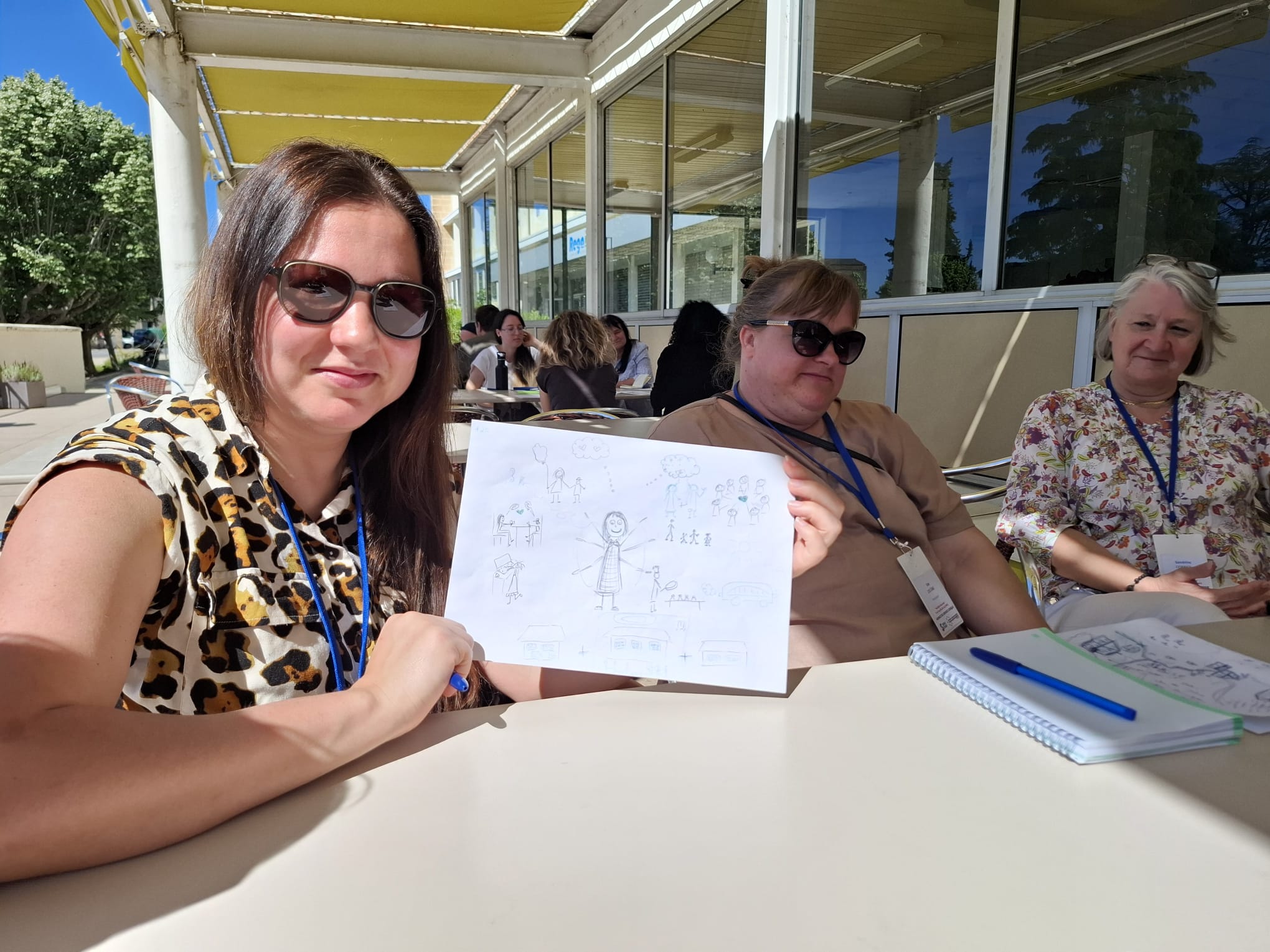
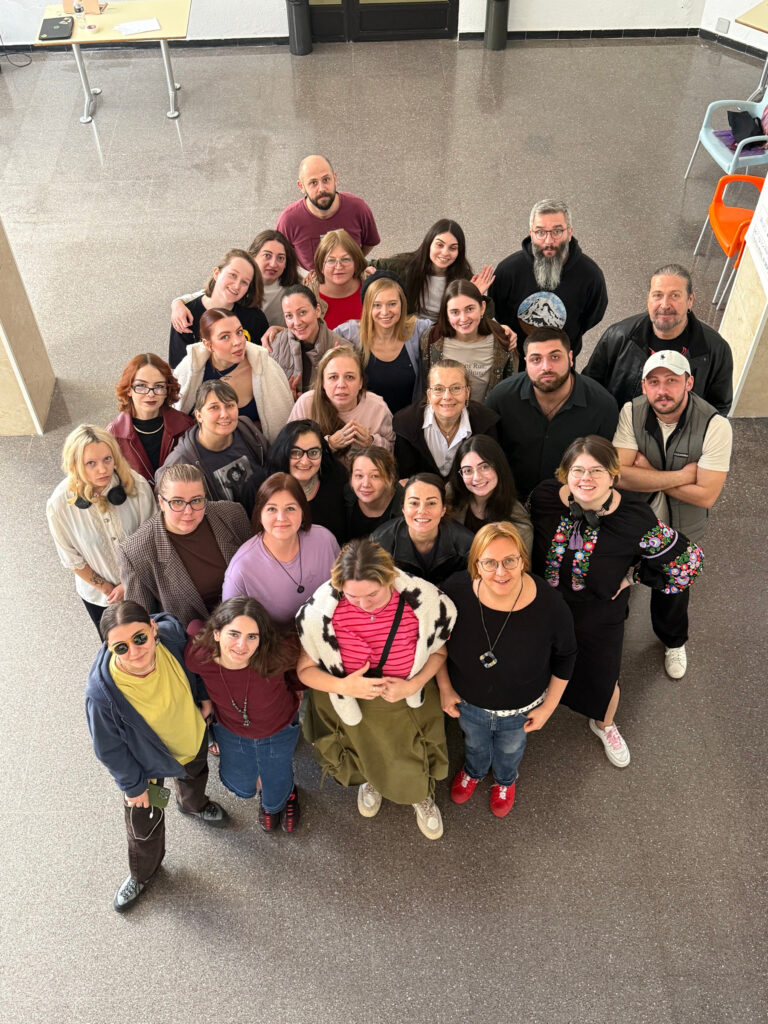
The next stop was Alicante, Spain, where 26 youth workers gathered in February 2026 for the CivicArt Lab, a five-day training on art as a tool for civic education. There were no lectures and no standard icebreakers. Instead of introducing themselves with names and job titles, participants made small handmade zines about who they are. Instead of discussing the city, they went out to read it: one group hunted for civic messages on the walls of Alicante, another searched bookshops for socially engaged authors, and a third simply listened to what the trees had to tell.
“The CivicArt training fundamentally changed my approach to non-formal education. Instead of separating civic education from creative activities, I learned how art itself can become a way of asking questions, encouraging dialogue, and creating emotional engagement.” – says Olesia Musiienko from Spring Art Labs, Ukraine
The week had heavy moments too. When people from Ukraine and Georgia talk about human rights, it is never an abstract. But there was also a full day of pure creation, when the group produced performances, a stop-motion film and a video, all on the theme of togetherness. On the last evening the training room turned into a dance floor, and participants taught each other their folk dances.
“Most importantly, the training demonstrated how art can serve as a tool for civic participation and community-building rather than being only an artistic product. This idea became the foundation of the project.” – says Ioanna Kryvenko, UNMUTE, Sketches of the City, Mykolaiv, Ukraine.
Then things started to happen
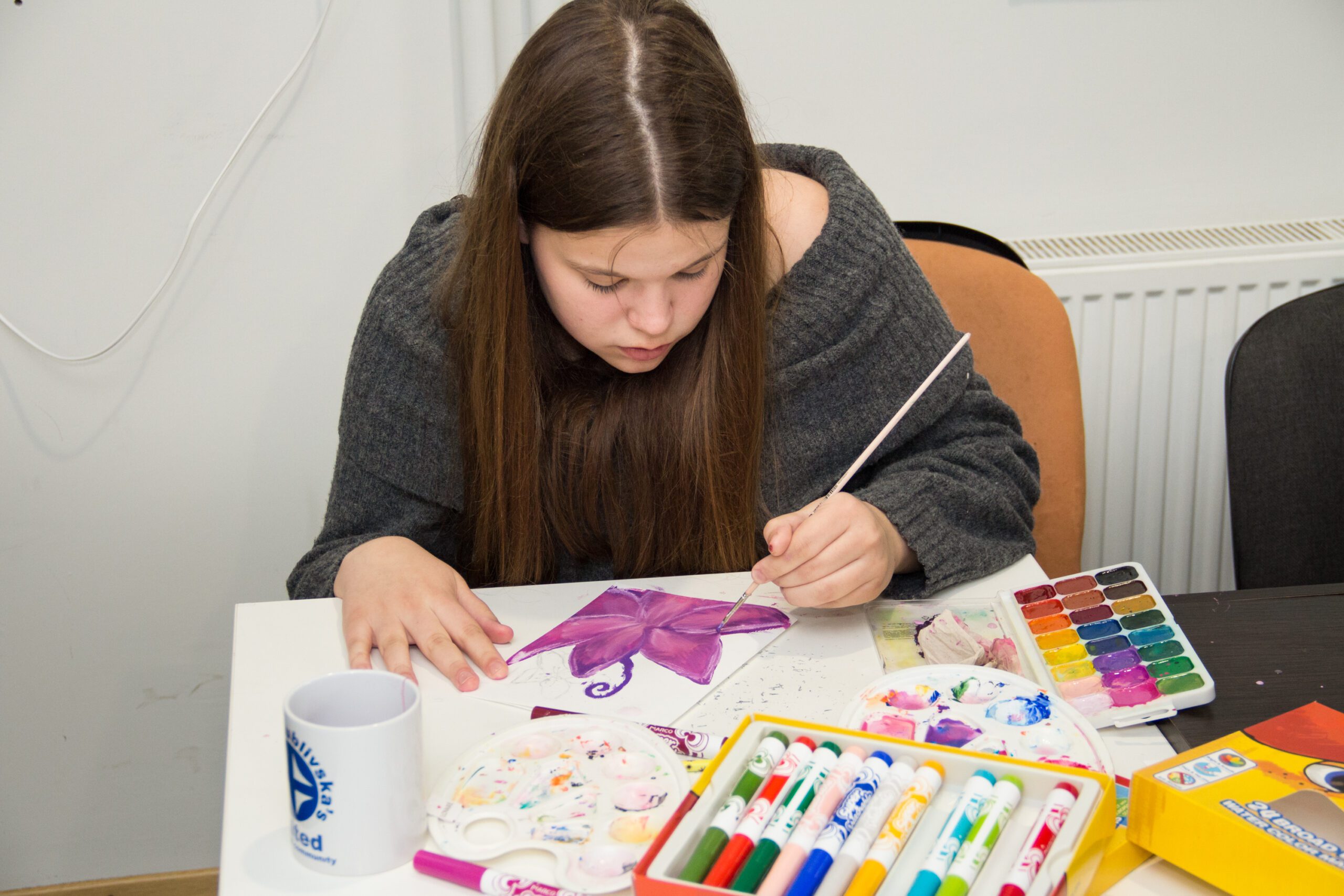
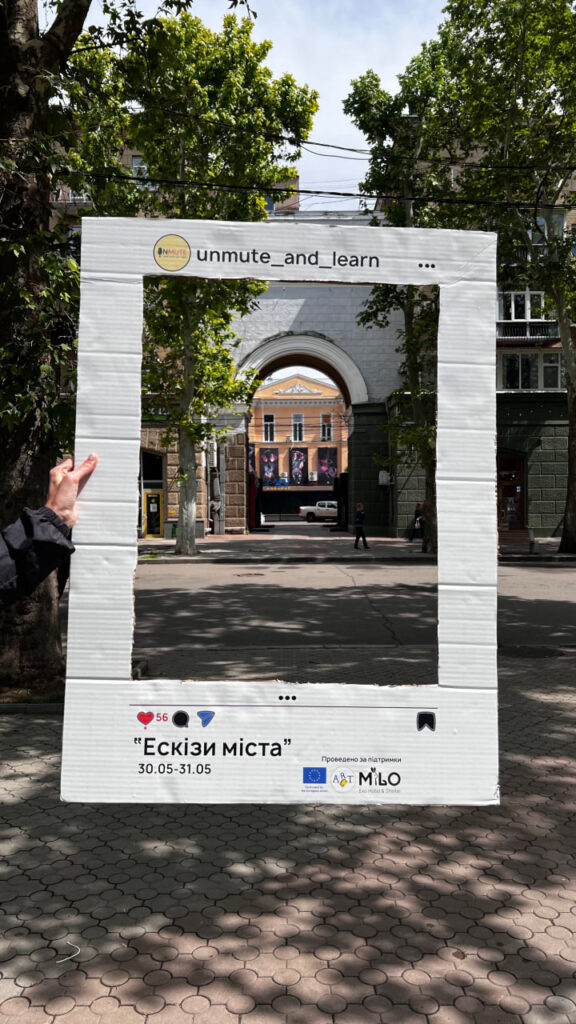
And then the ideas came home. What follows is what happened when trained youth workers returned to their communities. In Mykolaiv, young people went out with sketchbooks to “listen” to the rhythm of their city and turn it into drawings. In Kremenchuk, Spring Art Labs mixed creativity with honest conversations about community life. Students from all over Ukraine sent their works to the poster exhibition “Ukraine. The Power of Togetherness!”, a simple but powerful act of unity in the middle of war.
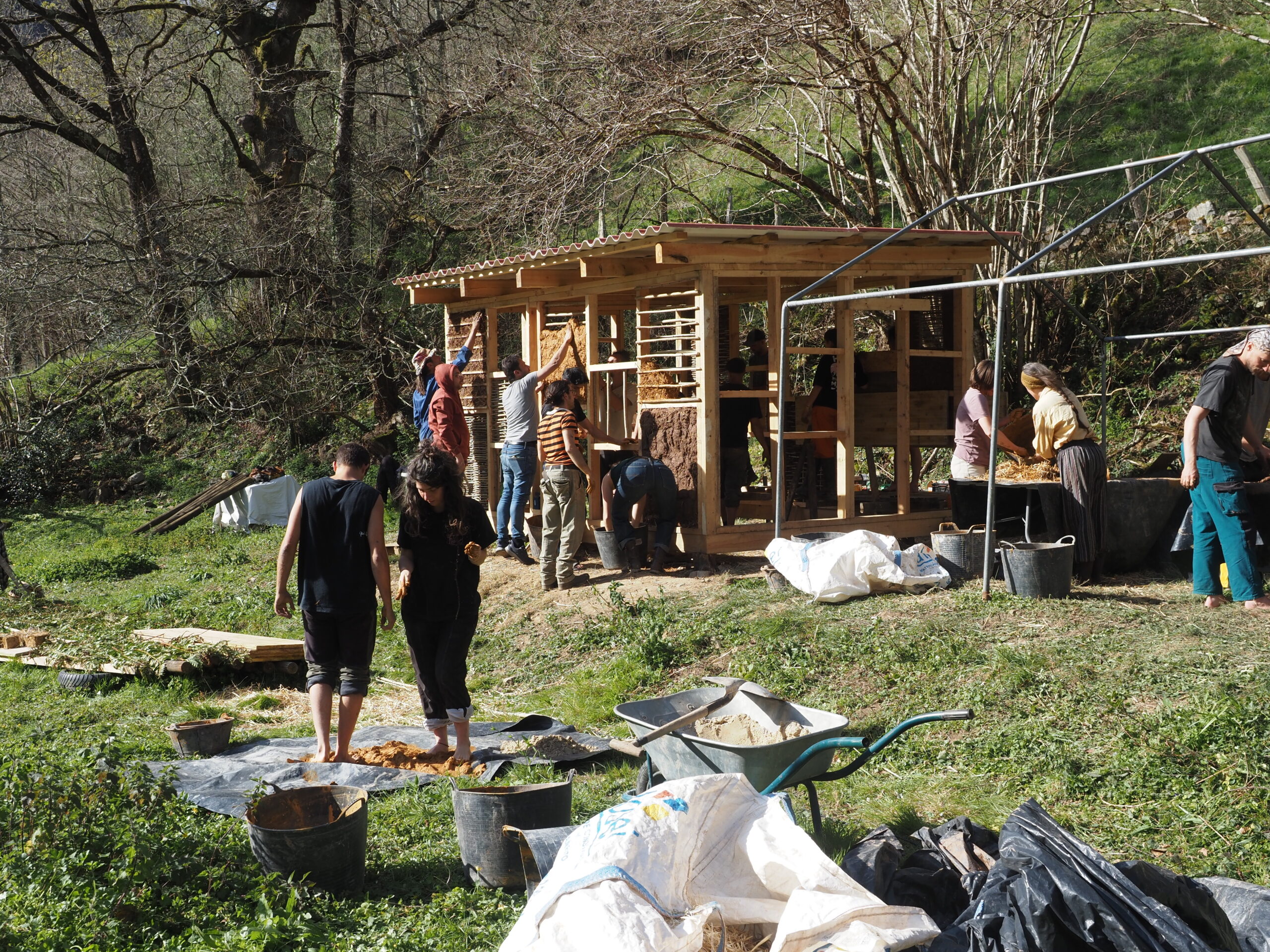
Georgia had its own story. Workshops travelled from Kazbegi to Dedoplistskaro, where citizenship was explored through movement and collective painting, and even through traditional calligraphy. It turns out that carefully writing the letters of your own language can feel like a small act of cultural pride. In one community, residents created a photo exhibition called “Our Shared City”. Not professional photographers. Just neighbours with something to show each other.
Of all the methods, one clearly won the hearts of participants: stop-motion animation. Frame by frame, young people turned paper cut-outs and everyday objects into short films with big messages. Here is what the participants of one art laboratory decided to say through their video:
“Togetherness is not based on the fact that we are the same. It is born when we are united by a common goal. We can be different: with different thoughts, characters, paths, but at certain moments in life something bigger than ourselves appears. And then we unite. Not because we are perfect together, but because together we are stronger.“
Behind the scenes, the partners were also building something less visible but longer lasting: a methodological guide on art-based civic education and an international community called the CivicArt Alliance, so that this approach can live on after the project ends.
What we have learnt
This was the bet the partners made from the very beginning, and the past two years proved them right: art does not just decorate civic education, it unlocks it. A young person who would never raise a hand in a discussion suddenly finds a voice through a drawing. A community that rarely talks about shared problems gathers around an exhibition and starts talking.
The project itself ended in autumn 2026, but the story does not. From 2027 a new chapter begins, under the name CivicArt Connect. The family grows, as partners from Moldova and Armenia join the consortium, and the whole team will work on one big goal: turning the CivicArt Alliance into a lasting international network of people and organisations who share the same values and want to promote civic education through art.
Some of the building blocks are already known. The CivicArt Competence Landscape, the map of facilitator skills that quietly shaped every session in Alicante, will grow further and be translated into learning tools in several languages. And an Idea Lab will bring people from all the partner countries together to invent new joint initiatives. The circle that once danced together in Alicante just keeps getting wider.
“These types of new connection foster more reflection on the future, more ideas of activities with local youth and children and being more productive in the fields of cultural and educational education.” – says Natia Bunturi, Saniao Arts Residency, Georgia
So, can a paintbrush change a city? Probably not on its own. But a paintbrush in the hands of a young person who believes their voice matters is a very good start.
| Learn more: civicart.rcfres.org · Instagram: @civicart2025 · Facebook: civicart.2025 CivicArt: Artivism in Youth Work was implemented by Resonance Charitable Foundation (Ukraine), Gergart (Georgia), KulturNest e.V. (Germany) and IICL (Spain). Co-funded by the European Union. Views and opinions expressed are however those of the author(s) only and do not necessarily reflect those of the European Union or European Education and Culture Executive Agency (EACEA). Neither the European Union nor the granting authority can be held responsible for them. |